In case you missed part 1, this is the story of my 1962 Fender Jaguar rebuild.
Recap: I found the body of this old guitar in a family friend’s shed, and then went through the process of piecing together the guitar itself, as well as the story behind it. We left off last week with the guitar looking like a beat-up old piece of junk covered in blue spray paint, but with enough identifying traits to mark it as an original 1962 body.
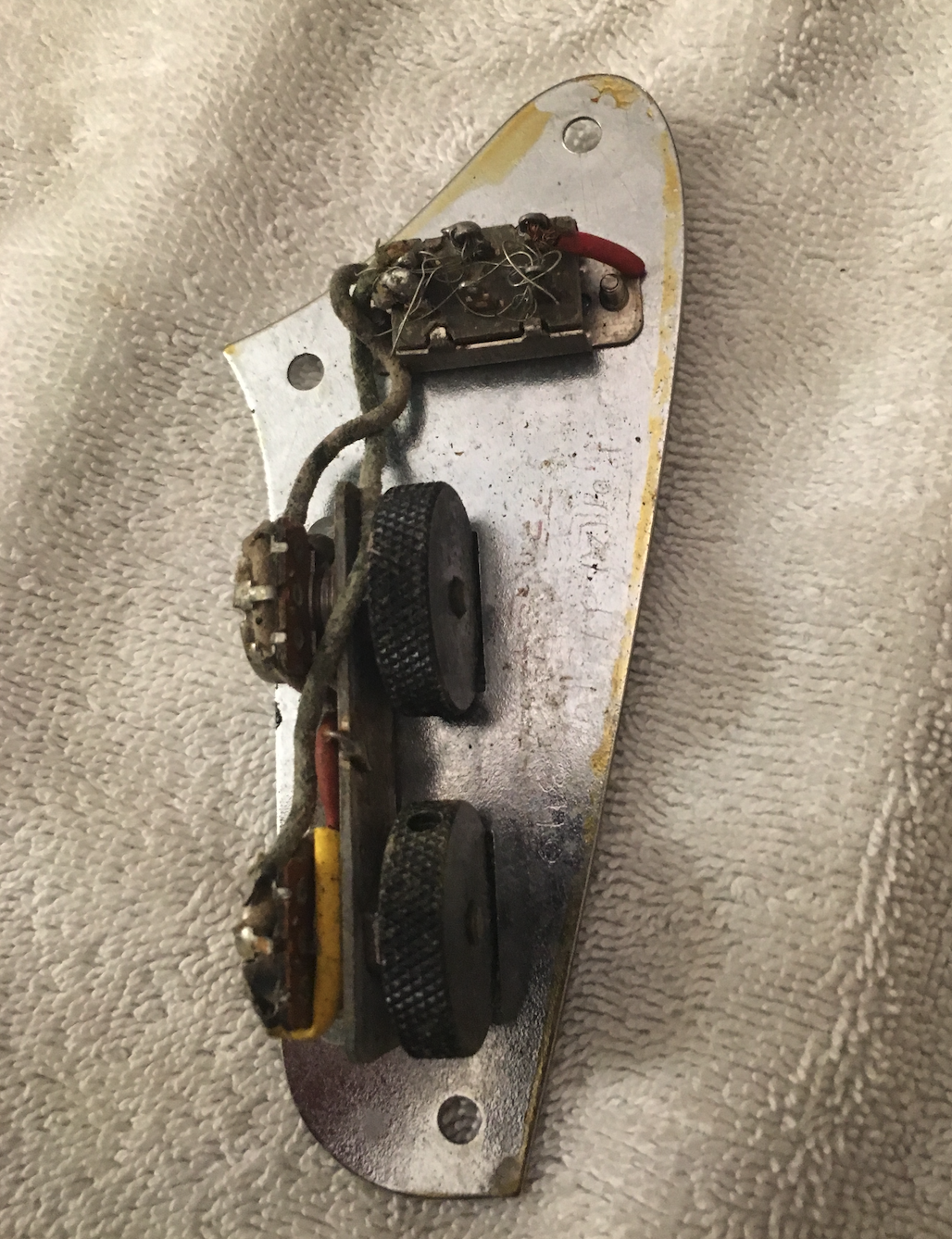
After a couple of weeks of investigation, we ended up finding even more original components. Unfortunately, the pickups and switches were too corroded to be usable, but the chrome pieces from the original guitar were mostly there. I think the yellow stains are from the old clear paint coat from the original guitar, but it’s hard to say.
But before we could get into the rewiring of the guitar, the next challenge was to get it painted. We found a great paint shop, which is sadly out of business now, but still had to decide what color to make the guitar. My dad and I searched for photos of the original guitar, but neither of us, nor my old instructor’s family, had any memory of seeing it before. I did my best to sand down the blue spray paint to find the original color of the guitar, but unfortunately there were very few clues to be found. I guess the guitar’s original finish was sanded down before its backyard repaint job, which is a shame. So I hit the internet to figure out what colors were possible.
The original colors were the classic Fender 3-color sunburst, Lake Placid Blue, and Olympic White. There were also some custom colors available, but given the treatment of this guitar, I assumed it wasn’t a custom job. The neck also might have provided a clue if we could have found it - all of these guitars had rosewood fretboards over maple necks, but may also had a headstock painted to match the body’s color. Unfortunately, even after weeks of searching, we never found another sign of the neck.
So after some discussion, we decided to get the guitar painted Lake Placid Blue, like the beautiful example below. This was mostly a matter of preference, but we also thought maybe my instructor wanted the guitar to be blue anyway, given his choice of spray paint color. We also didn’t think the Sunburst would look as good on the old wood, and we were worried that the blue paint would show through the clear sunburst. That actually wasn’t a valid worry, looking back, but we didn’t know any better at the time, so we stuck with blue. Plus, how awesome does that color look?
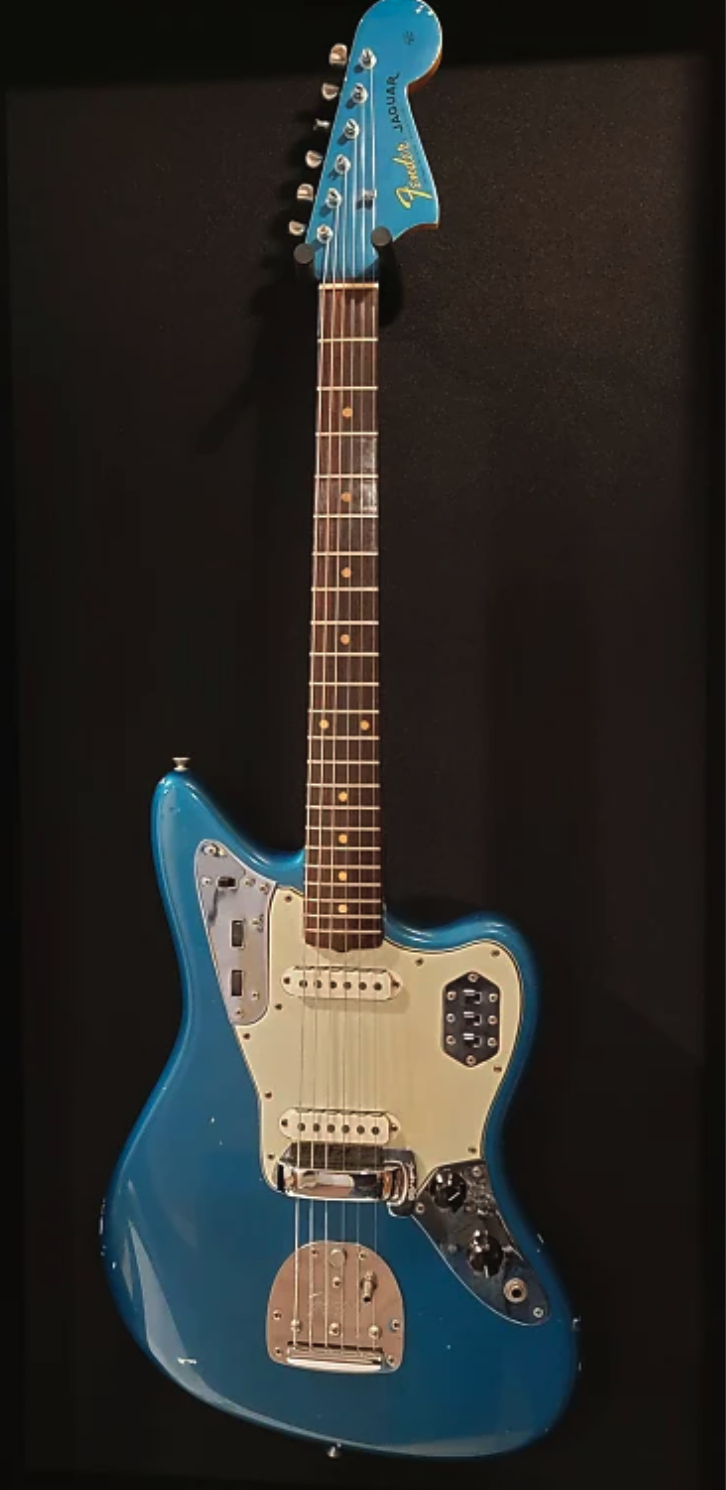
The only caveat, which we went back and forth about, was that the neck wasn’t going to match the body color. Not all Jaguars had matching headstocks - but the majority of the really high-end vintage guitars you see now from 1962 have the matching headstock. I just didn’t see a way to get it done in a professional (or affordable) way.
So we decided to get a new neck without a painted headstock, which was a 1962 replica made for the guitar’s 50th anniversary. Photos to come later.
It was actually during the sanding and painting process that we got some more clues about the guitar’s origins. Below are some photos from the paint shop where we sent the guitar, which show some markings presumably from the factory:
They also discovered some nail marks under the paint that would have been used for drying or applying the paint in the factory at the time. According to the paint shop, this further confirms the body’s authenticity, although there wasn’t really any doubt at this point thanks to the neck plate.
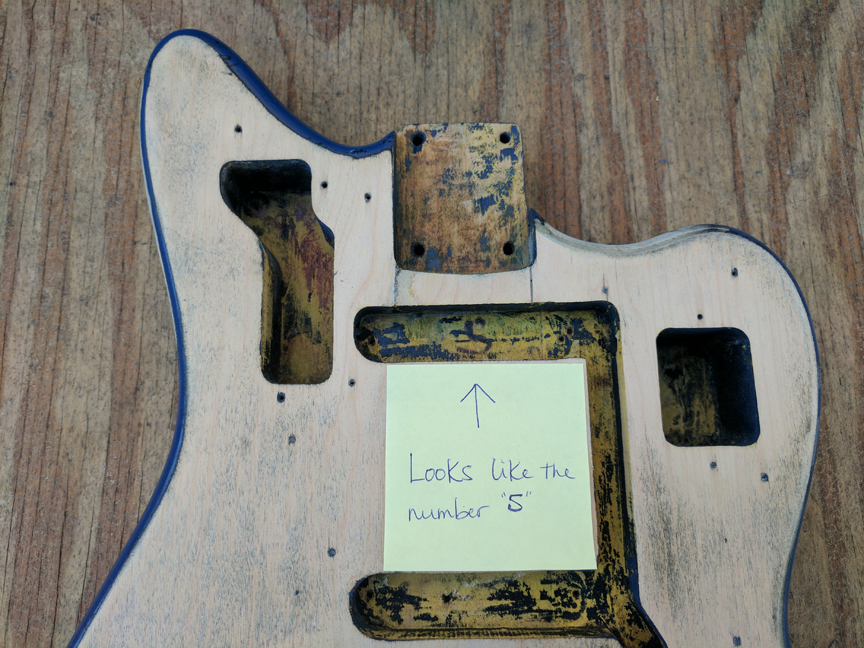
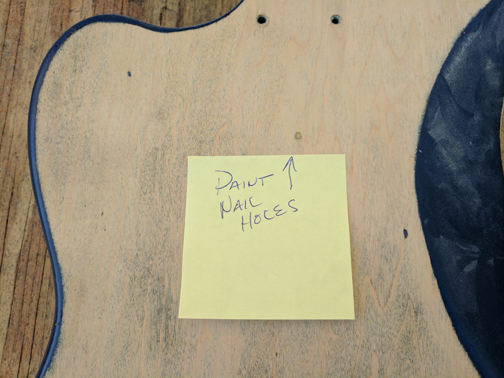
Now, you might have noticed something in these pictures that I didn’t notice at the time - the yellow paint coating the pockets. Put a pin in that for now - at the time we didn’t think anything of it, thinking that the yellow paint must have just been a primer sprayed on at the factory or something like that.
So we stuck with Lake Placid Blue, and a few weeks later, we got the body back looking fantastic:
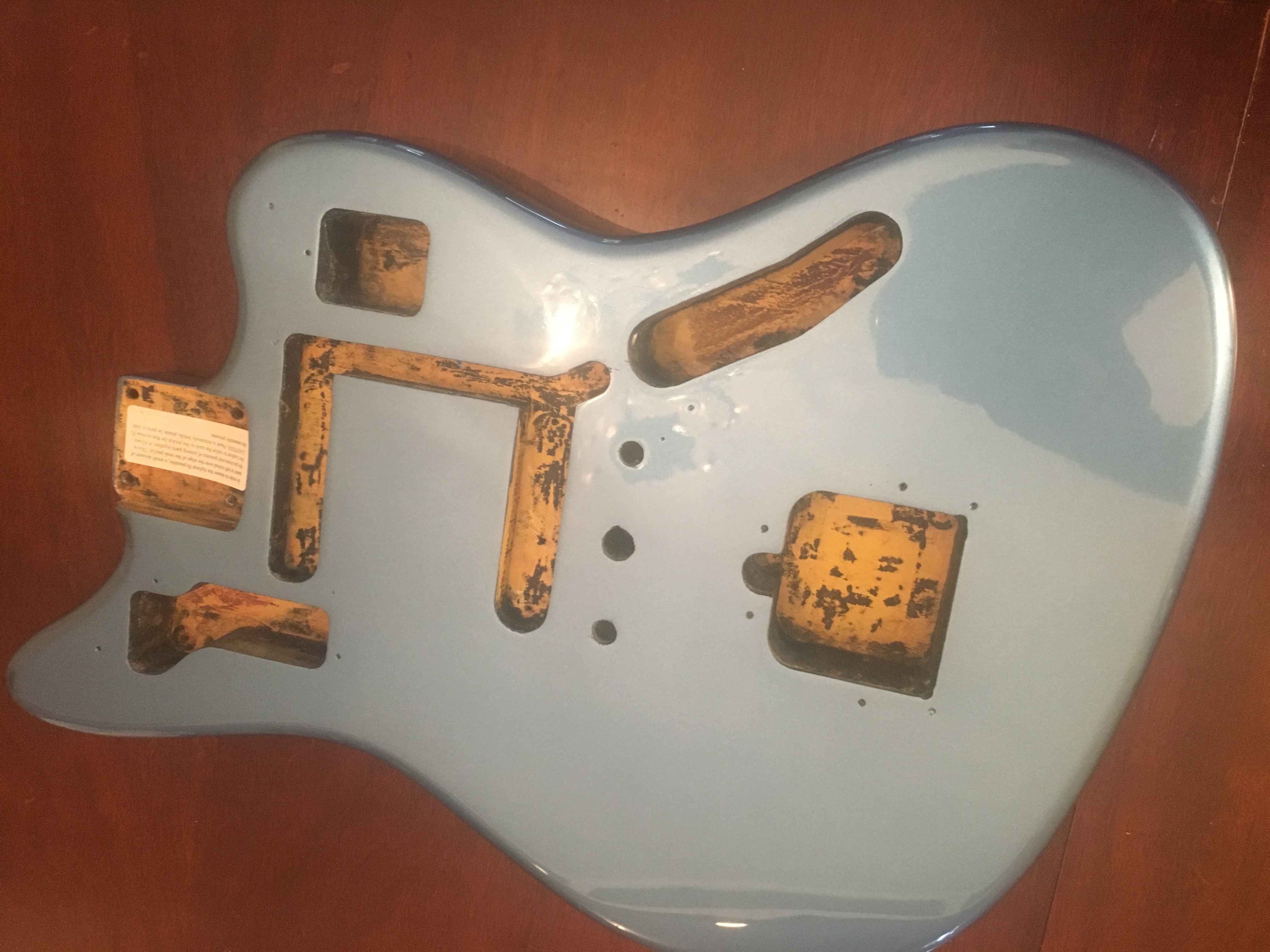
And of course, I had to lay out the chrome pieces and pick guard on the body to see how they were going to look:
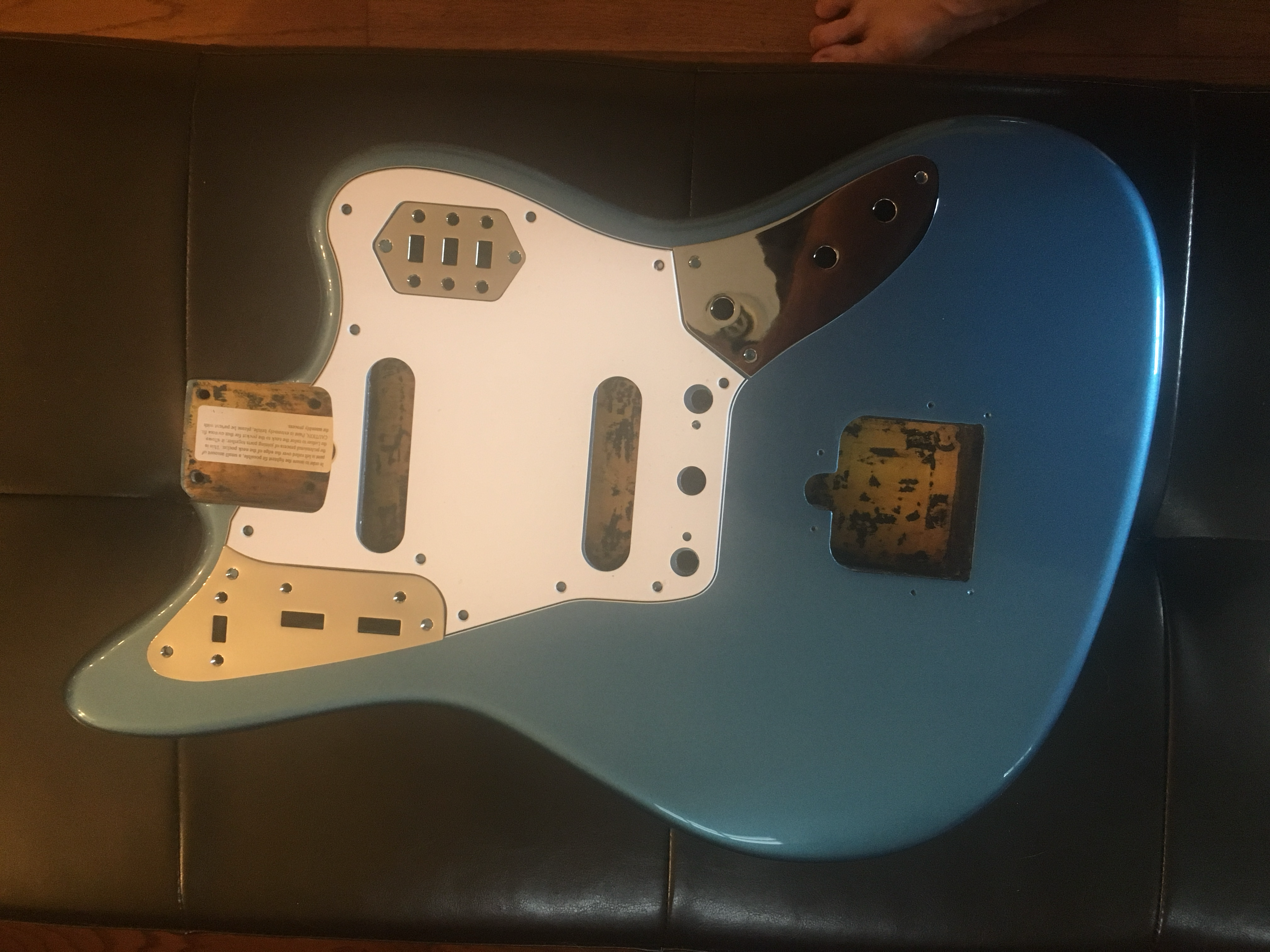
Not too bad so far! But the hardest part is yet to come.
Next week, the assembly process begins, along with the most notoriously complicated part of the Fender Jaguar - the wiring system.
Project BAE - Best Albums Ever
Your regularly scheduled jams