Welcome to the Best Albums Ever project, episode 5. This week (and every week of this project, really) got me thinking about how to listen to music from previous generations, and how to balance between listening for education and listening for pure enjoyment.
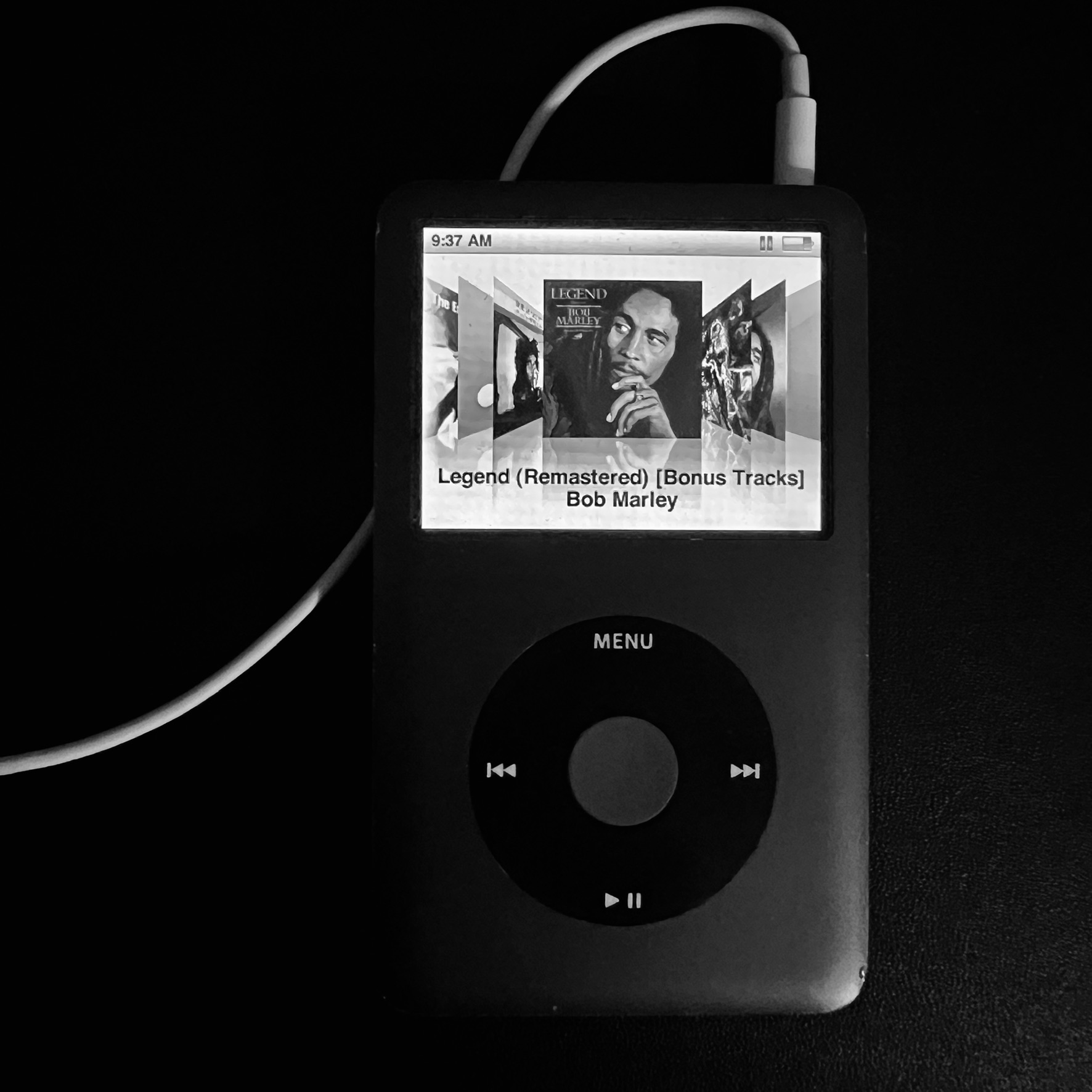
Listening to music from before your time
The BAE project is all about a Millennial (me) listening to and rating music that is to a large extent from before my time. It’s been eye opening how many different ways older music can appear to me now, and it also got me thinking about how our ever-growing catalog of music will seem to future generations.
Music curators love to be the ones to find the deepest cuts, the lesser known artists, and the overlooked songs. I love that - I think we should amplify great artists who for whatever reason miss out on the biggest media coverage.
My current project, listening to the best albums ever to refine and define my taste, naturally covers some pretty well-known and popular music. But the lens is different - as a younger person, the well known hits of the past are not obvious to me, or to my generation. They’re especially foreign to the younger crowd. That’s natural and good - each generation has to seek out their own sound, and that typically involves making new music of their own. But that means the great music of the past will become more and more unknown to them.
Jamwise isn’t only going to focus on the past, of course. Rather, it will focus on how to discover great music regardless of generation. Thats the point of the Best Albums Ever project, and future projects will go into the past as well as present day.
I think it’s probably common to grow up with your parents’ generation’s music. Mine listened to 70’s and 80’s soft rock, singer/songwriters, folk and some country, so that’s what I knew. Every generation and individual will learn a different mix of music from whoever raised them. And now we’re getting to the point where lots of widely known music is 2 generations old, and doesn’t have a natural mechanism to become widely known to the next generations, aside from stuff like Greatest Hits albums and movie soundtracks.
My fear isn’t that the old stuff will be forgotten - my fear is that people might miss out on enjoying it. I’d rather discover an artist and make my own decision about them than never discover them at all.
That can mean listening in an academic way to appreciate a trailblazing or important artist, or it can mean listening purely to see if you like the music. Both are great. And music from the past will sound different to current young people than it did to the young people who made it. That’s also awesome, and it also means that, for example, the 70’s hits chosen by that generation might not match the favorites from the 70’s chosen by a future generation, assuming they were able to discover them.
That last part is key - we can only choose our own old favorites if we listen beyond the greatest hits. Otherwise we’re only echoing the critics, algorithms, and top 40 stations of the world - which, as always, is fine if you like that! But if you want to listen more deeply, it pays to be aware of who decides what music you are exposed to.
Listening to entire albums is a great start in exploring music more deeply, although it’s a habit that’s become far less popular in the streaming age. Learning what kinds of music we do and don’t like is another way to penetrate the mists of history - that’s the point of the JamWise tracker. I want to use this data to understand why I like music, rather than letting an algorithm figure that out for me, and hopefully use that information to find great music from all generations.
I’m trying for a balance between listening for appreciation of our forebears and listening for pure personal taste. I try to approach all music from the past that way, especially when the music has had widespread critical success.
Appreciation of music’s context involves research, which again, isn’t everyone’s favorite thing. I prefer a light brand of research - enough to lend some context to the music I’m hearing, but not enough to bog me down and keep me from actually hearing the music. I’m not saying everybody has to do that, but I am sharing the fact that a little context has made me happier when listening to music.
On the other hand, some older music simply sounds great to me. That’s certainly impacted by my familiarity with the songs, but it’s also because many things people sing about are timeless. I relate more to a song by an artist who was my age when they recorded it in 1970 than I do to a song by an older artist released in 2023. So yes, the year of the album’s release might look old, but if the singer is young (or whatever age, gender, race, genre of music, etc. that most resonates musically with you) I enjoy the music just the same. Human expression doesn’t age, only the way we convey it.
And as I’ve said before, “all that stuff only matters if you like the music.”
On a similar note, I’ve started tracking some more data about my tastes that might be useful going forward. After reviewing a decent chunk of albums from the Rolling Stone list, it looks like there is actually less difference in my taste rating for older music vs. newer music. I know there are lots of albums to go, as well as a lot of other factors that determine if I like the album or not, but I think this is a pretty cool visualization that great music can be found in all generations.
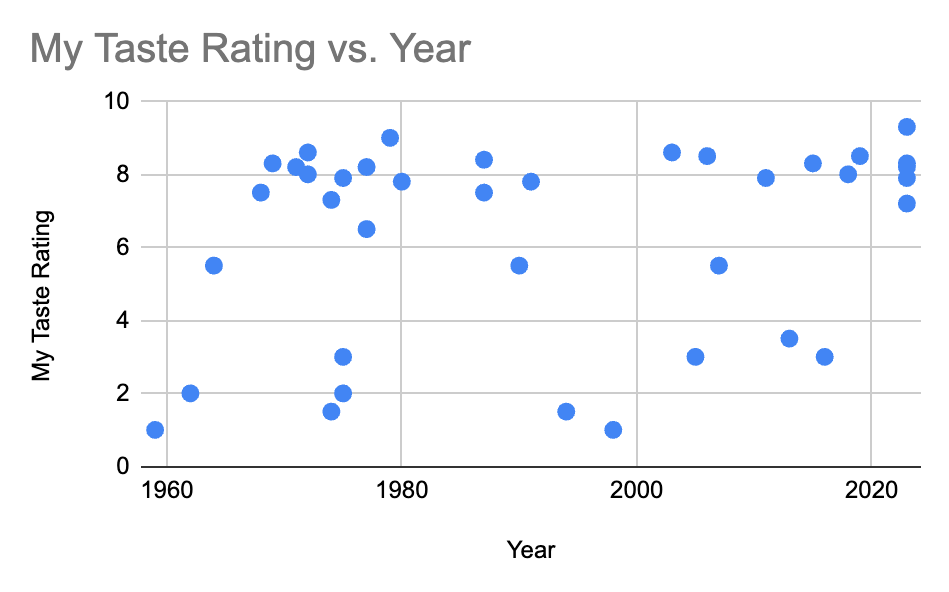
This is something I’ll keep a close eye on going forward, but it seems clear that music from the past, when it’s new to me, can feel just as fresh and relevant as brand-new music I’ve never heard before. In the end all that matters is what I like, and I have to avoid the frequent feeling that I’m dumb for not knowing an artist from a long time ago. That’s just counterproductive.