Review · 1991 · Shoegaze
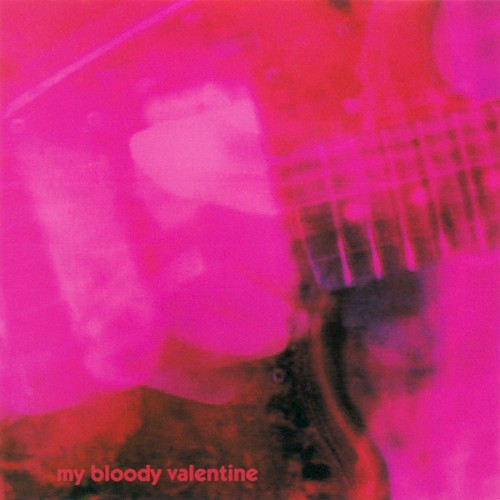
My Bloody Valentine - Loveless
My Bloody Valentine's Loveless reviewed: an album I first bounced off while shuffling best-album lists, and how the context of 1991 changed that.
The verdict
OK, this one actually was on the RS list, I just happened to miss it thanks to an oversight in my Excel sheet, and as many have pointed out it’s too major not to explore. So let’s just pretend this one was in last week’s issue, K?
This album has cemented the idea that I’ve been listening to the all-time greatest albums all wrong. I was going through best-album lists on shuffle, with no regard to time or genre. I actually first played this album months ago and had pretty ambivalent feelings towards it - but I’d listened to it alongside the randomly-selected mishmash of Lorde, Roxy Music, New Order, The Breeders, and Janis Joplin. No wonder I had nothing to latch onto - I was rudderless in a random sea of albums. The context of 1991 was entirely missing. Looking back, that seems funny when the entire reason I’m hooked on albums now is to avoid the senseless Spotify shuffle doom loop I’ve grown to hate so much.
I’ve found that listening to albums against the backdrop of the times and their peers to be far more enjoyable. I’ll admit there’s still a side of me that thinks music should be good even if you have no clue about the context. I made that case once when reviewing Kid A, an album I still struggle with - it’s considered great to a large extent because it was such a radical reinvention of Radiohead. But what if, I wondered, a no name band had released the exact same album? Would it be considered great? I had, and still have, my doubts. But I’m also realizing that line of thought is a bit flawed, and very shallow. Context is everything in the ephemeral world of the arts. How can you be subversive, for example, without knowing the context of what you’re subverting? How can, say, a war protest song mean anything if you were born decades after the war and never learned about it? How can Bob Dylan’s songwriting be appreciated without knowing how different and advanced it was compared to his contemporaries, especially when you’re young and you’ve heard a million better-sounding modern Dylan knockoffs over the years? Context matters.
This album didn’t hit me right the first time I heard it. It was lumped together in an issue covering the Kinks, the Beatles, Kanye West, and Green Day. Green Day also released their second album in 1991, to be fair, but there was still a fair bit of whiplash in that group. It was like drinking orange juice after brushing your teeth - the taste is just different based on what came before.
So while I still don’t love this album, I’ve learned two things. First, I can see the point a bit more clearly now since I’ve been so zoomed in on the early 90’s. The legacy left by this band, and this album, is massive. MBV’s Spotify bio claims they were the inspiration for the term Shoegaze because of how still they were during live shows - true to the genre’s name, this is introverted music, leaning on (and almost hiding behind) feeling-scapes of noise and atmosphere to express themselves instead of trying to find the right words. It’s telling that Spotify didn’t bother to activate the lyrics function for most of the songs - the lyrics feel like they’re not the point, like mumbled attempts at conversation of the stereotypical introvert, subverting swaggering in-your-face pop music. It feels like the early 90’s emergence of genres like shoegaze were the beginning of pop society’s celebration of the shy and introverted and all the ways we can express ourselves without being loud and obvious - something that’s almost universal today.
And second, I’ve learned that I seem to deal with my introversion differently. I don’t want to listen to music that reinforces and amplifies that “too-much-in-my-head'“ feeling, as MBV does for me. I want escapism, something that makes me feel the opposite of introverted and introspective. That’s just my preference - it’s the same if I’m unhappy; I don’t want to listen to sad songs. I want the opposite. So I can appreciate the strides made in this album, even though I’ll be leaving it out of my vinyl collection.
From the roundup Jamwise #38 - Best Albums of 1991, Pt. 2.